This blog summarises a recent podcast episode that explores how businesses can leverage the power of AI to accelerate their organisational growth, streamline business operations, and enhance the process and outcome of content creation.
Fact check - Do you think AI is replacing humans? No, it’s replacing human tasks.
The biggest misconception since AI has entered the tech horizon is that the technology is a direct replacement for humans. However, the reality is that it only replaces humans’ knowledge-based, repetitive tasks. The best way to deal with the situation is to master the use of AI.
Australian businesses should now look at this technology as their collaborative partner rather than as a competitor. Those who get along with the use of AI tools will outperform those who don't.
What are the roles that will thrive in the years to come?
Let’s look at the brighter side. With skilled use of AI, positions that demand creativity, intuition, and empathy will soon flourish. The roles of creative designers, content creators, and product managers will garner value if the respective professionals leverage AI as their assistant.
What’s the critical skill to adopt now? To learn to prompt and guide AI tools effectively.
Scaling Business with AI
Gone are the days when business growth could hardly be achieved without expanding the headcount. Today, AI enables you to grow even without hiring new resources. Companies are creating entire marketing work, with AI in their arsenal.
Whether it’s automation of lead qualification, customer support, or management of email outreach, AI tools like Make.com and Relevance AI help you do the job. This will be particularly invaluable for Australian SMEs on limited budgets striving to compete with larger enterprises.
Prompt Engineering - The New Essential Skill to Embrace
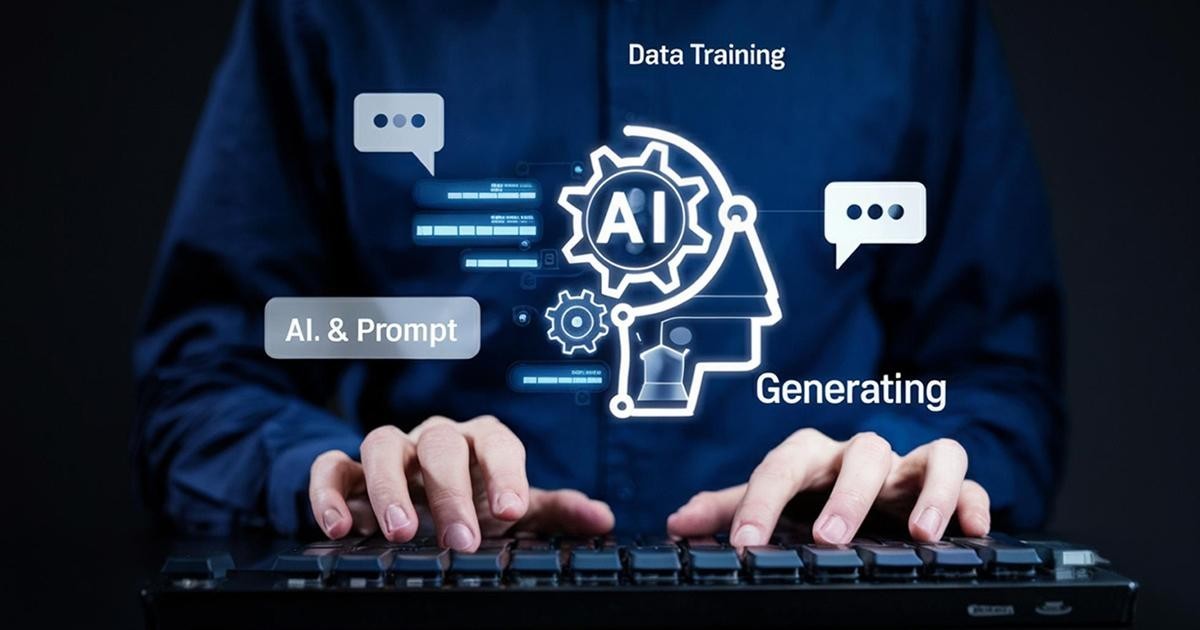
While coding knowledge has been the key to building powerful systems over all these years, it’s no longer the case. Vaibhav calls prompt engineering the new digital literacy. It’s the most valuable skill right now. It’s all about asking AI systems to think, understand the desired workflow, and prompting the right questions to guide them effectively.
How about becoming an AI generalist?
It’s about prioritising breadth over depth. Try to understand multiple domains well enough to connect them using APIs and automation platforms. Australian entrepreneurs wearing multiple hats can begin hands-on with tools like ChatGPT, Make, Zapier, and Midjourney.
Considering AI assistants as your team members
Look at these AI assistants as the super-skilled, super-charged interns in your team who efficiently handle jobs like task generation, research, and meeting summaries. For Australian start-ups that are struggling with lean team size, this could be the ideal way to free human time for high-leverage strategic thinking.
The content creation revolution
Wonder what Vaibhav's AI workflow spans?
- ChatGPT for research, outlining, scripting, and distribution
- Notion AI and Claude for scripting
- Descript, Opus Clip, and Adobe Podcast for re-purposing and editing
Voice AI for Scale
Voice AI is a super-interesting and exciting creation. Tools like Wondercraft AI and ElevenLabs create realistic voice clones and narrations for you. Such tools help with the scaling of video content without the constant need for re-recording, which is ideal for marketing and training materials.

What are the essential AI tools right now?
Some of the must-know tools of today include -
- ChatGPT
For conversational AI and content creation
- Midjourney
For visual content generation
- Relevance AI
For workflow automation
- Make.com
For process integration
- Opus Clip
For video editing and re-purposing
- Descript
For audio/video content editing
Small business integration
AI-powered CRM is something that Australian SMEs must focus on right now. AI CRMs (like HubSpot AI and Pipedrive) and customer support tools (like Intercom AI) are extremely useful. These and more such tools seamlessly integrate into the existing workflows of small businesses and help them with content creation, ad management, and automation for scheduling.
Leveraging hidden AI in everyday tools that are already in use
Popularly used applications like Grammarly, Canva, Duolingo, and Notion already embed AI. Here, the key isn't building new tools but using existing, widely used tools so efficiently that they perform even more effectively for you.

What are the entrepreneurial opportunities?
One of the micro-opportunities includes the position of prompt designer or AI tool integrator. Building niche automation agencies can offer viable business models to help those Australian businesses that lack in-house AI expertise.
Three business ideas for solopreneurs!
1. AI-Powered Personal Branding Agency
To help professionals build a digital presence using AI
2. Content Re-purposing Service
To transform existing content across platforms using AI
3. Custom AI Chatbot Creation
To serve local businesses that require customer service automation
What’s the takeaway?
While the podcast offers both a philosophical framework and practical strategies, it gives some golden insights for Australian businesses looking to navigate AI adoption. In an increasingly competitive market, companies will create a host of new opportunities.
Vaibhav recommends that professionals, rather than fearing job displacement in the upcoming years, focus on leveraging the relevant AI tools in their industries. This will help them keep up with the transforming world, upskill, streamline business operations, and explore new opportunities.
Australia’s digital landscape is evolving at a pace. To stay relevant, one shouldn’t wait to become an expert. Succeeding with AI takes curiosity, readiness, adaptability, and a mindset developed for continuous learning. Start experimenting and networking with AI-literate professionals now!