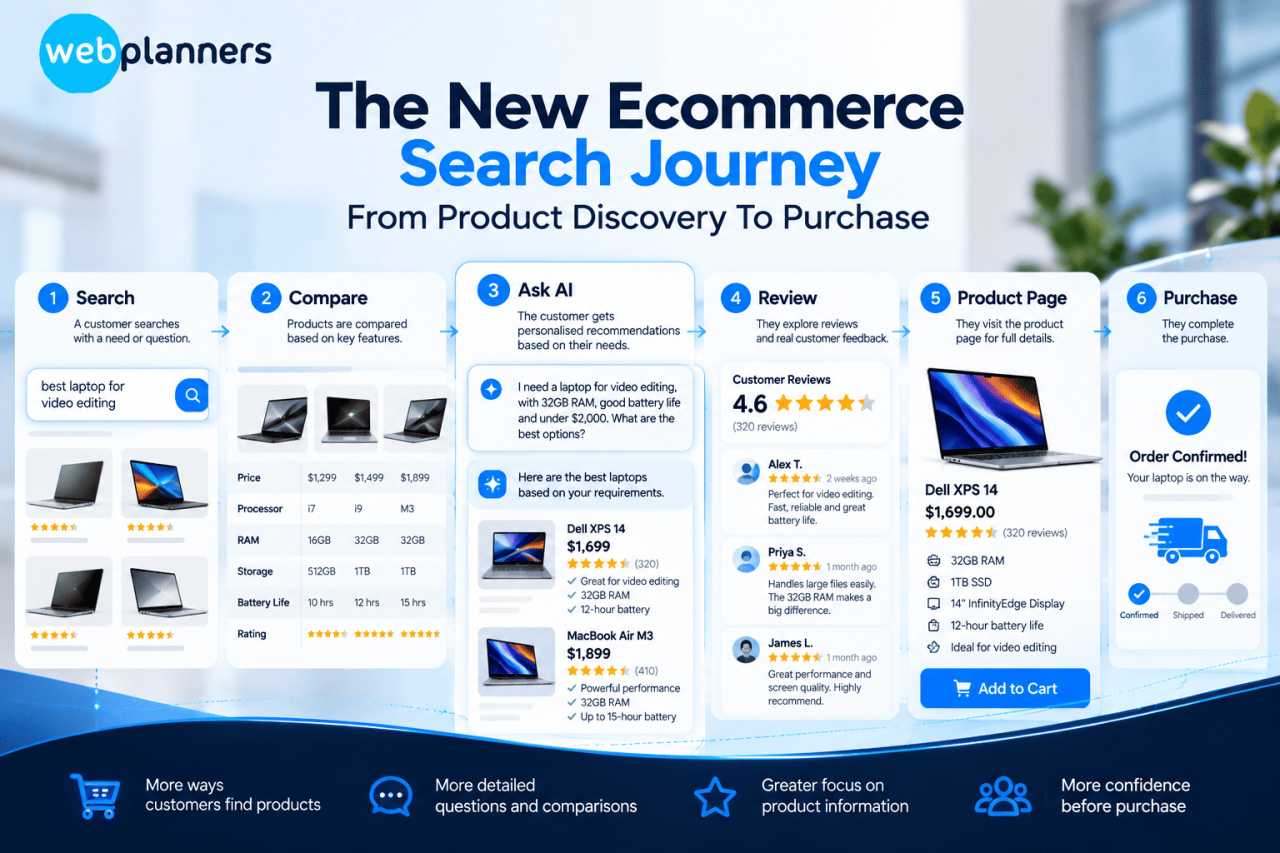
For years, ecommerce brands have worked towards a fairly familiar shopping journey.
A customer searches for a product, compares a few results, visits a website and decides whether to buy.
AI is changing how that journey starts.
A shopper can now describe what they need in much more detail, rather than searching for one or two product keywords. Google says its AI shopping experiences are designed around longer, more conversational shopping queries, with product information such as prices, reviews and inventory brought into the experience.
That creates a new challenge for ecommerce brands.
It is no longer enough to have a product catalogue that simply contains names, prices and short descriptions. Your product information needs to give search and AI systems enough context to understand what you sell, who it suits and how it compares with other options.
In this blog, we’ll look at what is changing from Google Shopping to AI shopping and the practical changes ecommerce brands can make now.
AI shopping puts greater emphasis on the quality and completeness of product information.
For ecommerce brands, the key priorities are:
- Keep product feeds accurate and up to date.
- Add useful product attributes, not just basic descriptions.
- Make product pages helpful for real buying decisions.
- Keep information consistent between your website and Merchant Center.
- Use structured product data to provide clearer context.
- Add genuine reviews and first-hand product information where relevant.
- Use AI SEO to understand how products may appear across conversational search experiences.
Google's Merchant Center now provides AI performance insights covering conversational shopping queries, product attributes and different stages of the shopping journey. These insights are currently available for eligible Merchant Center accounts in Australia, among other markets.
Google Shopping Was Built Around Products. AI Shopping Adds Context
Traditional Shopping searches often have a clear product focus.
Someone might search for:
“Leather office chair Melbourne”
An AI-assisted shopping journey can be much more specific:
“I need a comfortable leather office chair for working eight hours a day, with good back support, under $600 and available for delivery in Melbourne.”
The second query contains several buying signals:
- Product type
- Material
- Use case
- Comfort
- Feature requirements
- Price range
- Location
- Delivery expectations
Google's AI performance reporting now separates conversational shopping into discovery, evaluation and ready-to-buy stages. It also identifies popular product terms and attributes that shoppers use in those conversations.
For retailers, this means product information needs to cover more than the product name.
Product Data Is Becoming A Bigger Part Of The Shopping Experience
Your product feed might not be the part of your website customers see, but it plays an important role in how products are presented across Google's shopping systems.
Google states that product data is used to match products to relevant queries and is a foundational input for its AI-powered formats and experiences. Missing or conflicting information can also create eligibility and display problems.
That makes product data worth treating as an ongoing business asset rather than a technical setup completed once.
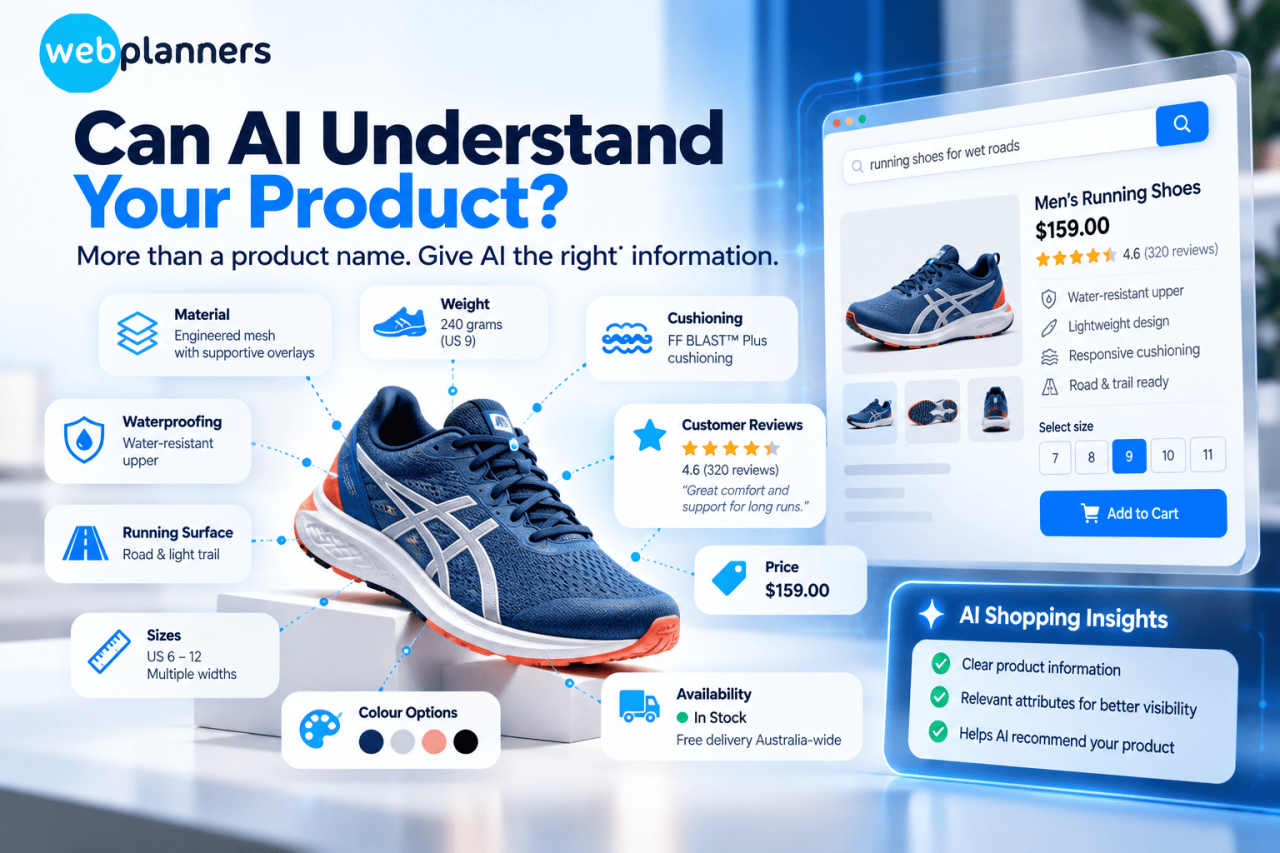
For example, an online running shoe retailer could provide:
- Shoe weight.
- Heel-to-toe drop.
- Cushioning level.
- Running surface.
- Waterproofing.
- Width options.
- Available sizes.
- Upper material.
- Recommended use.
- Product reviews.
These details give customers more information to work with, while also giving search systems more context about the product.
Prepare Your Ecommerce Brand For AI Shopping
Your Product Page Still Needs To Do The Selling
Better product feeds do not make product pages less important.
Once a customer reaches your website, the page needs to answer the questions that influence the purchase.
A furniture retailer, for example, should not stop at:
“Modern three-seater sofa made from premium fabric.”
A stronger product page could explain:
- Exact dimensions
- Seat depth
- Fabric composition
- Cleaning requirements
- Cushion filling
- Assembly requirements
- Delivery options
- Warranty
- Suitable room sizes
- Customer feedback
This is also where useful product expertise can separate one retailer from hundreds of stores selling similar products.
The e-commerce SEO strategy behind a site should therefore look beyond rankings and consider whether each important product page provides enough information for someone to make a confident decision.
Product Feeds And Websites Need To Agree
One of the simplest problems ecommerce brands can fix is inconsistency.
Imagine your website lists a product at $249, while the product feed still shows $279.
Or the website shows a product as available in five colours, while the feed only contains two.
Or a product has detailed material information on the website but none of those attributes are included in the submitted product data.
Google specifically identifies conflicting information between feeds and websites as a potential issue.
This is why ecommerce teams should regularly check:
- Prices
- Availability
- Product variants
- Images
- Product identifiers
- Shipping information
- Product attributes
- Descriptions
- Promotions
Google's 2026 Merchant Center specification updates also added further product-level shipping attributes and a video link attribute, showing how much more detailed product data is becoming.
AI SEO Needs To Start With Real Product Information
AI SEO is not simply about adding more AI-generated content to an ecommerce website.
The foundation is still accurate, useful and well-structured information.
For a skincare retailer, that could mean explaining:
- Skin type
- Key ingredients
- Concentration
- Product texture
- How to use it
- Potential product combinations
- Storage requirements
- Suitable use cases
For a commercial equipment supplier, it could mean providing:
- Technical specifications
- Capacity
- Dimensions
- Operating requirements
- Suitable industries
- Warranty information
- Replacement parts
- Maintenance requirements
AI SEO also depends on clear site structure, well-organised product information and content that gives AI systems enough context to understand what a business sells and when its products are relevant.
It is about making the information behind your products clearer and more useful.
Reviews Add Information That Product Feeds Cannot
Product specifications tell customers what a product is.
Reviews can tell them what it is actually like to use.
For example, a shoe retailer might list the correct technical specifications, but customers may reveal that:
- The shoe runs slightly narrow.
- It feels better for longer runs.
- The colour looks different in natural light.
- The sole performs well on wet surfaces.
That kind of first-hand information adds another layer of context.
Ecommerce brands should therefore treat genuine reviews as useful product information, rather than simply as a collection of star ratings.
The same principle applies to original product photography, demonstrations, comparison information and practical advice based on real customer questions.
Search Is Becoming More Conversational, But The Basics Still Matter
AI shopping does not eliminate the need for a technically sound ecommerce website. Product pages still need to be accessible, fast, mobile-friendly, and well-structured. Structured data helps search engines to understand products, prices, availability and other details.
A practical schema markup checklist can help ecommerce teams check whether important product information is being clearly communicated.
Site performance matters too. Product pages that take too long to load create a poor experience regardless of how customers arrive.
This is why Core Web Vitals and AI search remain relevant when improving ecommerce websites for the changing search experience.
Product Information Should Match How People Actually Shop
The biggest change may be the shift from short product searches towards questions, comparisons and specific requirements.
Someone buying a mattress may ask:
“Which mattress is suitable for a side sleeper who gets hot at night?”
Someone buying a laptop may ask:
“Which laptop is suitable for video editing, has 32GB RAM and costs less than $2,500?”
Someone buying commercial equipment may ask:
“What coffee machine is suitable for a busy Melbourne café serving 300 cups a day?”
These are not just keyword variations.
They represent different buying requirements.
Ecommerce brands need product information that addresses those requirements naturally.
This is also where supporting content can help. Comparison pages, buying advice, product explainers and useful FAQs can give customers more context before they reach a product page.
Local And Conversational Intent Still Have A Place
AI shopping does not make local SEO or voice SEO irrelevant.
It can make them more connected to ecommerce.
A customer might ask:
“Where can I buy a compact air purifier near Melbourne CBD today?”
Or:
“What is the best baby car seat available near me under $500?”
These searches combine product intent with location.
That means ecommerce brands with physical stores should keep their business information, store locations, opening hours, product availability and local pages accurate.
A properly managed local SEO strategy can support these location-based journeys, while voice search SEO can help address more conversational search behaviour.
What Ecommerce Brands Should Change Now
The practical work can start with a product data audit.
1. Review Your Product Feed
Start by checking for missing attributes, wrong prices, outdated stock levels, product variants and descriptions that do not match across your listings.
2. Improve Product Information
Give customers the specifications and practical details they need to compare products properly. Without this, they will look elsewhere.
3. Strengthen Product Structured Data
Make sure key details like price, availability and product information are easy for search systems to read and understand.
4. Use Real Customer Questions
Look at what customers actually ask. Support enquiries, reviews, sales conversations and onsite searches all reveal the information people need but cannot find.
5. Review AI Shopping Visibility
If your Merchant Center account shows AI performance insights, check popular terms, product attributes and shopping-stage data. This shows where your product information might be missing opportunities.
For larger ecommerce sites, a Melbourne SEO consultant can help connect product data, technical performance, content and AI search visibility into one practical plan.
The Shift Is From Product Listings To Product Understanding
Google Shopping helped retailers put products in front of people searching for them.
AI shopping is moving the experience towards understanding why someone wants a product and which option fits their requirements.
That makes product information more valuable than ever.
The brands that adapt do not need to fill every page with more words. They need to provide better information, keep their data accurate and make their products easier to understand.
For Australian ecommerce businesses, the next stage of search is not simply about getting products seen.
It is about giving search and AI systems enough useful information to understand what makes those products relevant.
Build A Stronger Strategy For AI Shopping
Conclusion
AI shopping is making product information part of the customer journey before someone reaches your website.
Ecommerce brands should focus on accurate data, useful product pages, strong feeds and information that answers real buying questions.
Webplanners helps Melbourne ecommerce businesses build stronger product visibility across changing search experiences. Talk to Webplanners about your ecommerce growth strategy.
FAQs
Does AI Shopping Mean Ecommerce Brands Need To Rewrite Every Product Description?
No. Begin with the products that generate the most revenue and search visibility. Improve missing specifications, vague descriptions, product features and customer-facing information before making any large scale changes across the entire catalogue.
How Often Should Ecommerce Product Data Be Reviewed?
Product data should be checked when prices, stock, variants, shipping or other vital product data changes. Regular audits can also be used to identify missing attributes and inconsistencies that may creep in over time.
Can AI Shopping Send Customers Directly To A Product?
Yes. Google is developing shopping experiences where customers can see product information within AI interfaces, and eligible products can also participate in native commerce experiences that allow checkout directly on certain Google surfaces.
What Is The Biggest Mistake Ecommerce Brands Make With AI Shopping?
Treating AI shopping as a content-writing exercise. The bigger opportunity is improving the underlying product information: attributes, specifications, pricing, availability, reviews, structured data and feed quality. Better content helps, but it works best when the product data underneath it is accurate and complete.