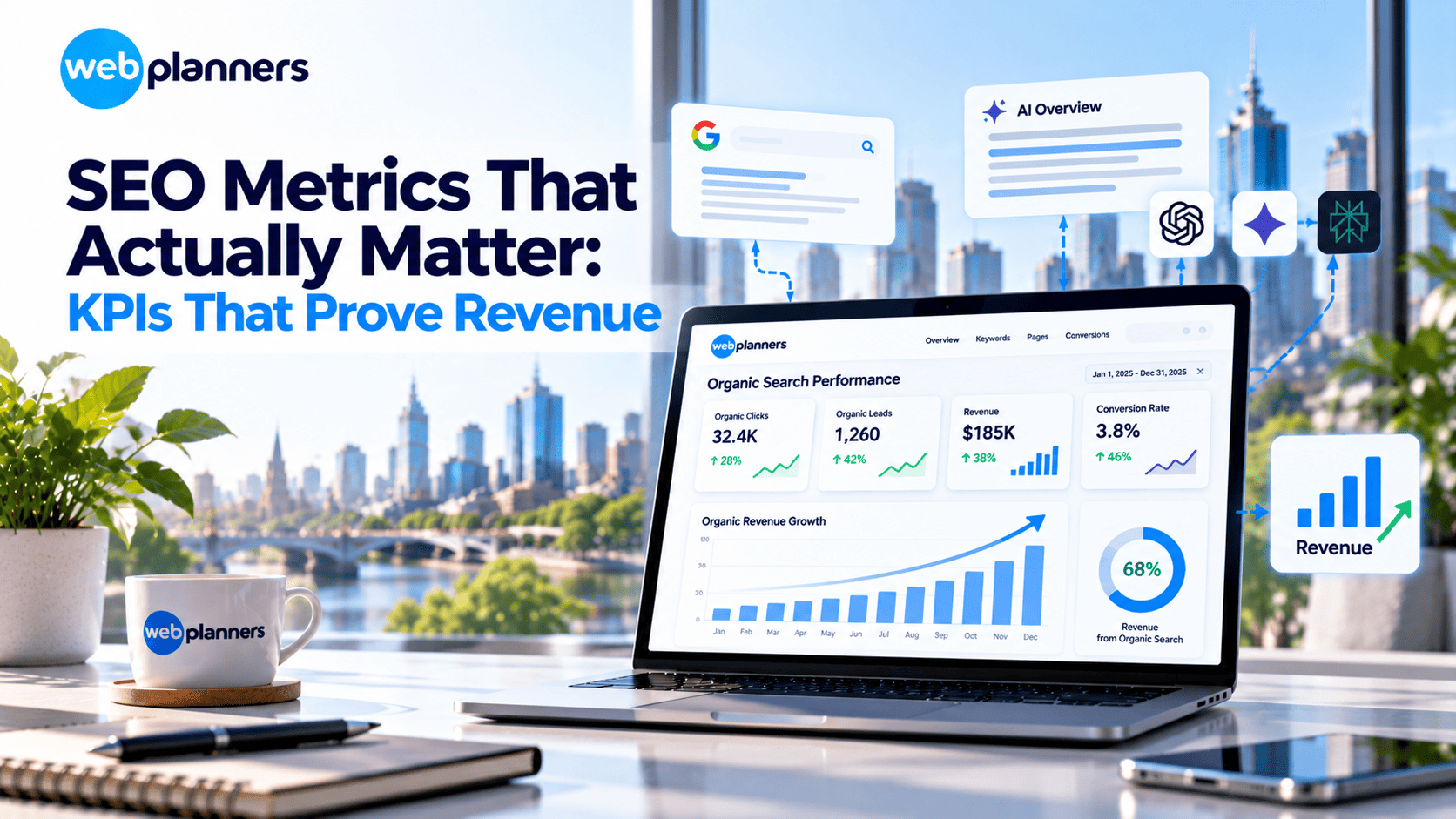
SEO Metrics That Actually Matter: KPIs That Prove Revenue
“We’re ranking for 400 more keywords” sounds impressive until the CFO asks how many sales that produced. Too many SEO reports are full of numbers that move without meaning anything to the business. With AI answers now taking a share of clicks, a keyword count tells you even less than it used to.
- Which numbers deserve the headline, and which are only diagnostics
- Which KPIs connect to leads, sales and revenue
- Where AI visibility fits into the picture
- How to present all of it to the people who sign off the budget
At Webplanners, we build SEO reports around leads, revenue and AI visibility instead of keyword counts, and it changes how leadership talks about SEO.
In this blog, we will understand which SEO metrics are worth tracking, how to set SEO KPIs that tie to revenue, and how to report them so leadership trusts the numbers.
The most valuable SEO metrics show how organic search contributes to leads, sales and revenue. Rankings and traffic help measure visibility, but they should be assessed alongside business outcomes.
Key SEO KPIs include:
- Organic leads and revenue: Measure enquiries, sales and pipeline value from organic search.
- Cost per acquisition: Compare SEO investment with conversions generated.
- Non-brand organic growth: Track traffic from people searching for services rather than your business name.
- AI search visibility: Monitor brand mentions, citations and referral traffic from AI platforms.
- Technical SEO health: Track indexing, Core Web Vitals and crawl errors.
The right metrics depend on your business goals, with revenue, qualified leads and acquisition costs taking priority in leadership reports.
Vanity Metrics vs Value Metrics
A vanity metric isn’t wrong, it’s just easy to inflate and hard to connect to money. Here’s how the common ones compare with what to report instead.
| Vanity metric | Why it misleads | Value metric instead |
|---|---|---|
| Total keywords ranked | Includes irrelevant, low-intent terms | Rankings for priority commercial keywords |
| Total organic sessions | Counts traffic that never converts | Organic leads, sales and revenue |
| Domain Authority / Rating | A third-party estimate, not a Google metric | Links from relevant, authoritative sites |
| Bounce rate | Ambiguous, and GA4 uses engagement instead | Engagement and conversion rate by landing page |
| Pages indexed | More isn’t better | Indexed share of pages you want ranked |
Vanity metrics still have a place as diagnostics. They just shouldn’t be the headline.
Stop Tracking Metrics That Doesn’t Matter
Revenue KPIs: The Numbers Leadership Cares About
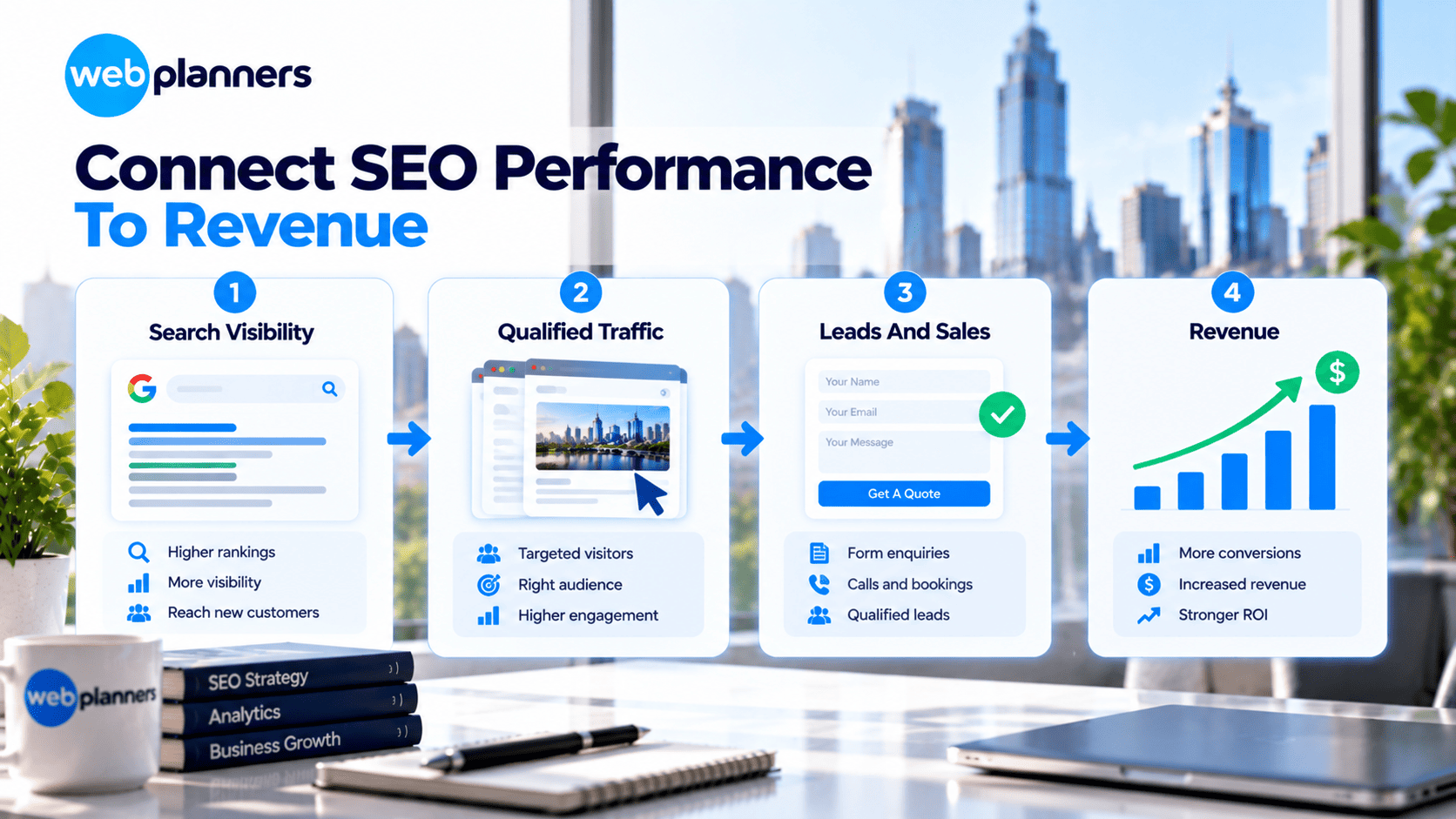
These four sit closest to the money, so they belong at the top of every report.
Organic Leads Or Conversions
Count form fills, calls, bookings, trials or demo requests that come from organic search. Track each one as a key event in GA4. If you need help setting that up properly, our Google Analytics consulting team can sort the tracking first.
Organic Revenue And Pipeline
For online stores, track organic revenue and average order value, which is the core measure of ecommerce SEO success. For lead-gen businesses, pull pipeline value and closed revenue from organic leads through your CRM.
Cost Per Organic Acquisition
Divide your total SEO investment by the number of organic conversions. Put it next to your paid channels and you’ll show how SEO becomes more efficient over time.
Non-Brand Organic Growth
Brand searches mostly come from people who already know you. Growth in non-brand clicks is the sign that SEO is reaching new customers.
Visibility KPIs: Search And AI
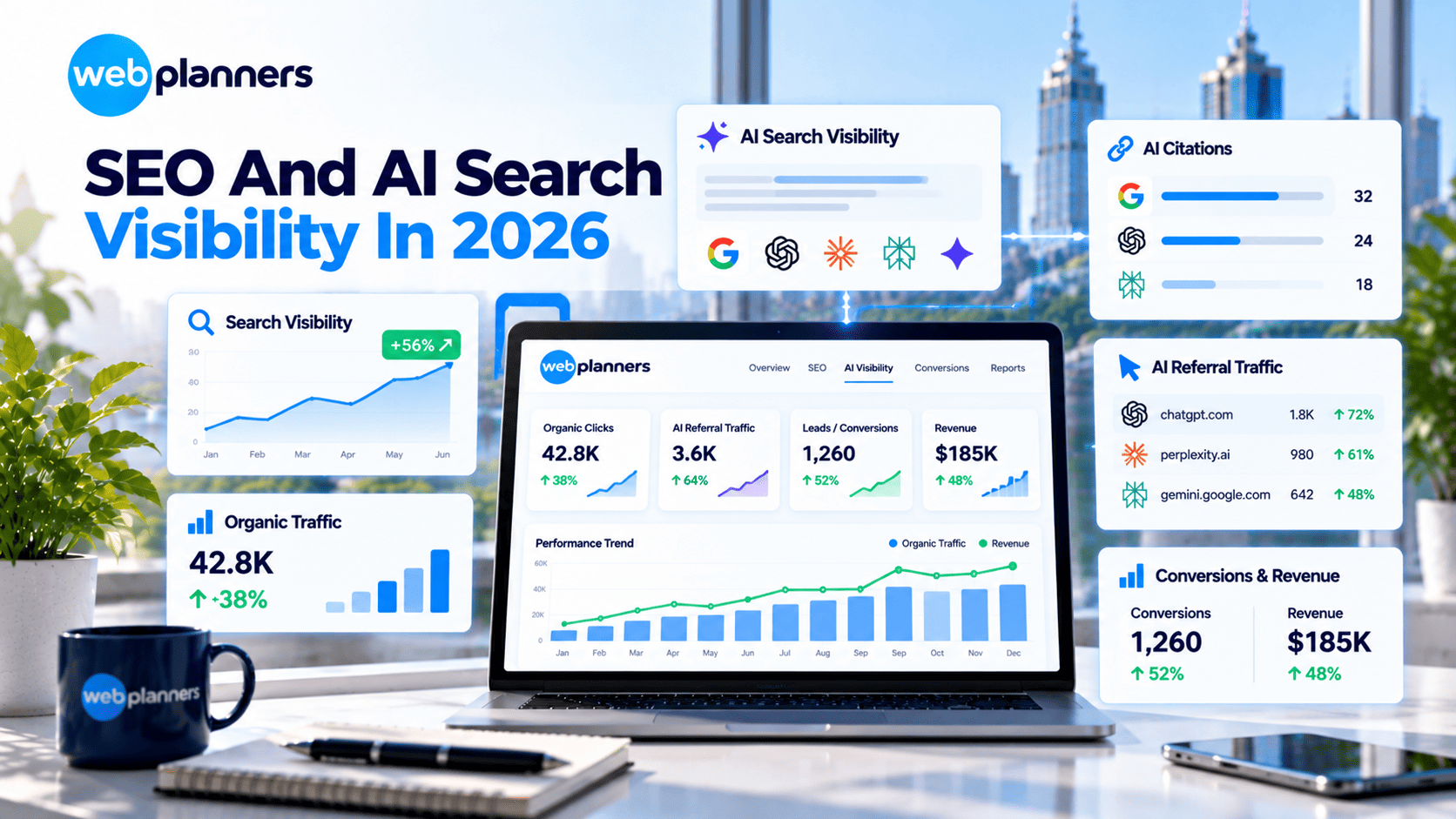
Visibility metrics show whether you’re winning the market, including the parts of it that now happen inside AI answers.
Share Of Voice
This is your estimated visibility across a set of priority keywords, compared with competitors. It shows whether you’re gaining ground or just moving around.
AI Overview And LLM Citations
Track how often your brand or pages are cited in Google AI Overviews and AI Mode, ChatGPT, Perplexity and Gemini, using a fixed set of prompts. This is the fastest-growing visibility metric in 2026, and it’s the core goal of AEO and GEO work.
AI Referral Traffic
These are visits from AI assistants such as chatgpt.com and perplexity.ai, which you can track in GA4. Volumes are often small, but conversion rates can be strong.
Click-Through Rate On Priority Pages
Pull this from Search Console. If CTR falls while rankings hold steady, AI answers or SERP features may be absorbing your clicks.
Technical Health KPIs
Technical numbers don’t pay the bills, but they warn you early when something is about to.
- Share of priority URLs indexed
- Core Web Vitals pass rate on mobile
- Crawl errors and broken internal links
- Time to index new pages
These are leading indicators. Send the detail to your web team and give leadership a short summary.
Track Quality Leads Along With Rankings
Enterprise SEO Metrics And Reporting Cadence
Different people need different numbers, so match the report to the reader.
| Audience | Frequency | What to show |
|---|---|---|
| Executives | Quarterly | Organic revenue or pipeline, cost per acquisition, share of voice, AI visibility |
| Marketing leads | Monthly | Leads by landing page, non-brand growth, priority rankings, content performance |
| SEO and web teams | Weekly | Indexing, technical errors, Core Web Vitals, ranking movements |
For large sites, split every metric by site section, product line, market or location. Problems and wins are far easier to find that way, and it’s especially useful for multi-location businesses working on local SEO.
How To Report SEO To Leadership
A good report is short, honest and built around the outcome. Here’s the order that works best.
- Lead with outcomes: Start with leads, revenue or pipeline, then explain what drove them.
- Show trends: Compare year on year to remove seasonality.
- Connect actions to results: For example: “We improved 12 service pages, and enquiries from those pages rose X%.”
- Be honest about attribution: SEO often assists conversions that get credited elsewhere, so show assisted conversions too. Google Analytics attribution helps here.
- End with next steps: Say what you’ll do next quarter and the impact you expect.
Conclusion
Rankings and traffic are easy to report, which is exactly why they get over-reported. The numbers that earn trust are the ones tied to leads, revenue and cost, and those are the ones leadership remembers.
The other shift is AI. Google AI Overviews, ChatGPT and Perplexity now shape what people see before they ever reach your site, so citations and AI referral traffic belong in the report next to rankings. Start small and pick your four or five revenue and visibility KPIs, set a baseline, and review them every quarter. If you’d like a team that tracks AI SEO performance alongside traditional results, Webplanners can set it up with you.
FAQs
What Is the Most Important SEO Metric?
The most important SEO metric is the one that most closely connects to your business revenue and can be measured reliably. For most businesses, this includes organic leads, sales, and pipeline value. While keyword rankings and organic traffic are also important, their real value lies in how effectively they contribute to business growth.
How Do I Measure SEO Success?
To measure SEO success, start by tracking organic leads, revenue, and cost per organic acquisition. You should also monitor non-branded organic traffic growth, share of voice, and AI search visibility. Compare these metrics against year-over-year performance to account for seasonal fluctuations and identify meaningful improvements in your SEO strategy.
What Are the Best SEO KPIs to Report to Leadership?
The best SEO KPIs for leadership focus on business outcomes and measurable growth. These include organic revenue, pipeline value, customer acquisition cost, share of voice, and AI search visibility. Technical metrics, such as crawl errors and Core Web Vitals, should be included in detailed SEO reports for your web development and technical SEO teams.
How Do I Measure AI Search Visibility?
To measure AI search visibility, create a fixed set of relevant prompts and test them monthly across platforms such as Google AI Overviews, ChatGPT, Perplexity, and Gemini. Track how often your brand is mentioned or cited in AI-generated responses. Additionally, monitor referral traffic from these platforms in Google Analytics 4 (GA4) to understand how AI search contributes to website traffic and potential conversions.
How Long Does It Take for SEO KPIs to Improve?
SEO improvements can take anywhere from a few weeks to several months, depending on your website’s current condition, competition, and the scope of optimization. Early indicators, such as indexing improvements and keyword rankings, may change within weeks. However, meaningful growth in organic leads and revenue typically takes three to twelve months. Consistent optimization and regular performance monitoring are essential for achieving sustainable SEO results.
Our Recent Blogs

Couldn't be happier with how things have gone since working with Webplanners. The team genuinely cares about getting results and has helped us stay ahead of the competition. Thanks for all the hard work, legends!
Webplanners has been a huge part of our digital growth. Managing multiple websites isn't easy, but they've made the whole process feel effortless. The results have exceeded our expectations.
The team has been great to work with and always keeps us in the loop. We've seen steady improvements over time and the whole process has been straightforward. Very happy with how things are going.